
Polk Projected Versus Actual Release
TDCJ defines Projected Release Date as the date calculated by its Classification and Records staff when a current prisoner is expected to leave incarceration if parole does not occur sooner. The displayed value may reflect maximum expiration, mandatory-supervision rules, eligibility, and Board action. It is a forecast inside a state-prison record. It is not a receipt showing that the person passed through the release gate.
An actual release is documented after the custody event. For parole or mandatory supervision, a release certificate states the rules and confirms the release type. For sentence completion, the discharge date and discharge record are stronger proof. At Polk County Jail, the official Released detail gives a date, exact time, How Released, and Release Reason. A transfer ends Polk custody but does not mean the person entered the community.
Pretrial cases work differently. A person held while a charge is pending has no TDCJ-style date to count down. Bond approval, a judge's order, dismissal, credit for time served, a detainer, or transfer may control the outcome. The court docket explains the legal event, while the jail release detail supplies the operational exit time.
Find Polk County Projected Dates
Start by separating Polk County Jail from TDCJ. The TDCJ current-inmate search covers people incarcerated in a Texas state prison or state jail. It does not cover a person whose only custody is the Polk County Jail, a federal sentence, or immigration detention at IAH. It also excludes people already released from TDCJ.
- Identify the operating authority from the booking, court judgment, or known facility. Do not select a tool solely because the facility has a Livingston address.
- For a current TDCJ prisoner, search by exact last name and first initial, seven-digit TDCJ number, or SID. Gender and race can narrow the match.
- Copy the field exactly as “Projected Release Date.” Also note location, offenses, parole information, and maximum-expiration information shown.
- For a Polk County Jail sentence, ask the jail or sentencing court for the controlling judgment, jail credit, holds, and current calculation.
- When the anticipated date arrives, verify the event through the release detail, IVSS, official status line, release certificate, or discharge record.
TDCJ says its public information updates on working days and is at least 24 hours old. A same-day move can lag. Exact identifiers reduce wrong matches. If a former prisoner no longer appears, TDCJ's free email channel can provide incarceration history and projected information, but it does not provide photographs.
The official TDCJ definitions source sets out what the date means.
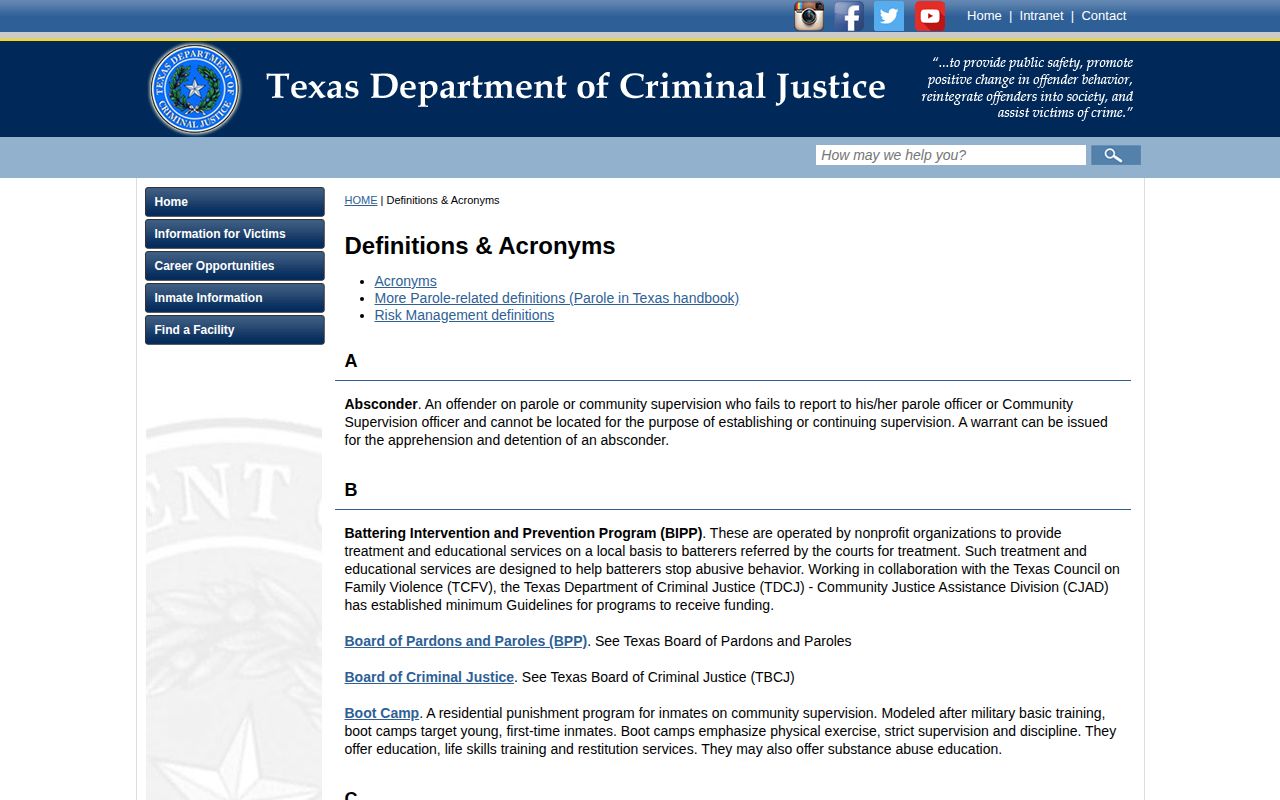
This definition is why a displayed projection should retain its label and never be shortened to a guaranteed release date.
Polk Release Good-Time Rules
Texas good conduct time is governed by Government Code §498.003. It affects eligibility for parole or mandatory supervision. It does not shorten the sentence imposed by the judge. Accrual depends on classification and qualifying activity, while disciplinary forfeiture or later restoration can alter the calculation.
Mandatory supervision uses calendar time plus accrued good conduct time reaching the maximum term, subject to statutory exclusions and Board discretion. For eligible offenses after August 31, 1996, reaching the arithmetic point does not guarantee release. The Board may deny discretionary mandatory supervision under the required findings, and a later review may change the projected value.
A Polk County jail sentence has its own record path. The court judgment, jail credit, locally authorized good-time application, holds, and release order control. The TDCJ projected field must not be copied onto a county misdemeanor sentence. Ask the jail or court for the actual calculation rather than promising a fixed local credit rate.
The official good-conduct statute appears below for direct review.
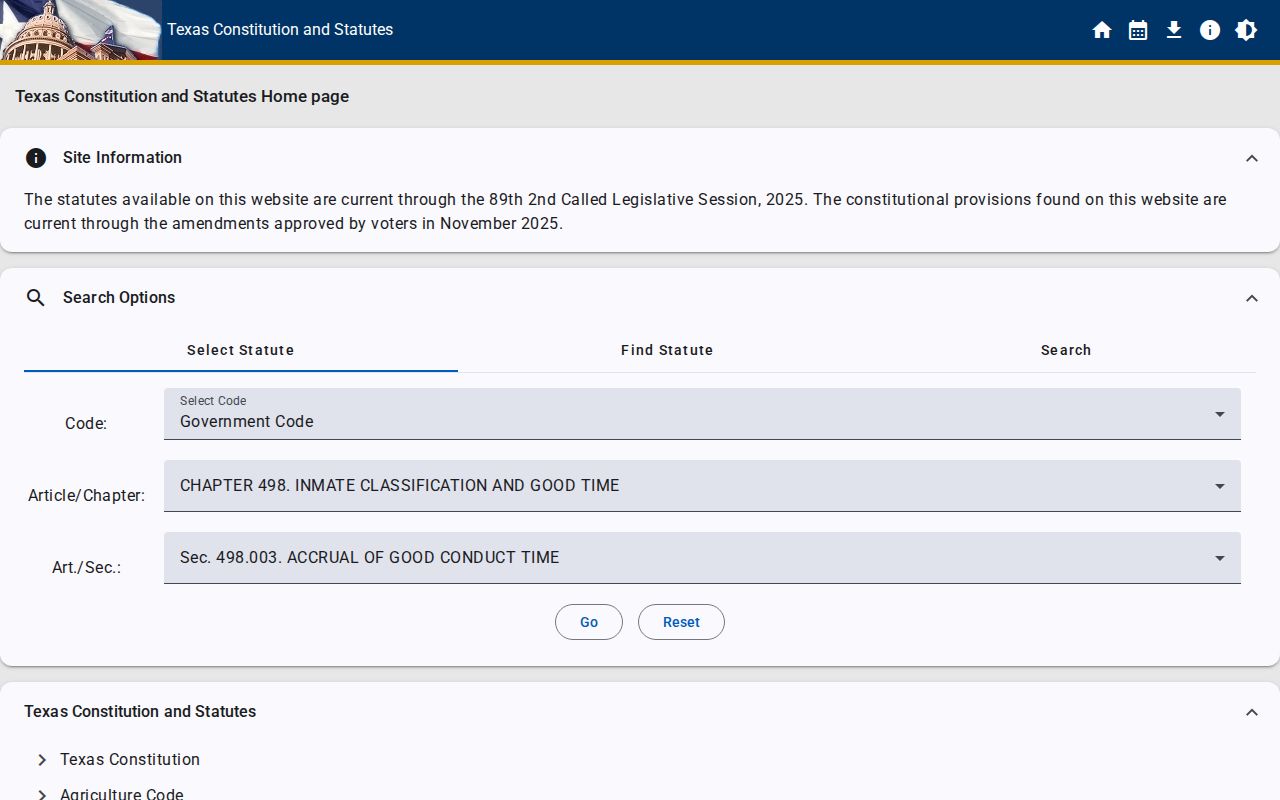
The statute supports an eligibility calculation, not a claim that every earned day moves the prisoner's final release by one day.
Why Polk Release Dates Change
A projection can move because the legal and administrative inputs change. The offense date matters because different versions of release law can govern. Consecutive sentences, corrected records, program requirements, residence approval, or a hold from another authority may also intervene. Even a favorable Board code can require more processing before release.
| Factor | Possible effect | Where to verify |
|---|---|---|
| Good-time forfeiture or restoration | Changes an eligibility or mandatory-supervision calculation | TDCJ Classification and Records |
| Board action | May approve, condition, deny, or later reconsider release | Board status and review result |
| Detainer or hold | Can route the person to another authority instead of the community | Holding agency and release certificate |
| Court order or corrected sentence | Changes the controlling term or release authority | Sentencing docket and corrections record |
| Program or residence condition | Can delay processing after favorable action | Parole Division release-status line |
| Data update lag | Makes the public page trail the actual event | Unit, jail, or status line |
A transfer deserves special care. Someone leaving Polk County Jail for TDCJ or another jail has a completed county booking but remains confined. A person leaving Polunsky for another TDCJ unit has also transferred, not released. Read the receiving authority and use its locator.
County and state calculations also differ in who can explain them. Polk jail staff can identify jail credit and the authority reflected in the local file, while the sentencing court supplies the judgment and later orders. TDCJ Classification and Records maintains the state time calculation. Sending one request to the wrong office can produce a technically correct record that answers the wrong custody question.
Keep a dated copy of each official value used. If the projection changes, compare the offense information, maximum-expiration field, Board result, and any notice of a hold or program condition. Do not average conflicting dates or select the earliest one. Ask the record holder to identify the current calculation and preserve the response with the date checked.
Confirm Polk County Actual Release
For a Polk County Jail departure, use the official Released archive and open the detail. The release date and exact time show when Polk custody ended. How Released and Release Reason explain whether it was bond, a court outcome, or transfer. Compare the docket if the legal result matters. When the online record is missing, request the central-file release record, including the authority and authorizing document.
For a recent TDCJ case, IVSS can help with custody, parole, or mandatory-supervision status. Before a favorable Board vote, call 844-512-0461. After favorable action, TDCJ directs release-status questions to 512-406-5202. A release certificate confirms parole or mandatory supervision; a discharge record confirms sentence completion.
VINE is an event and notification tool, not a certified record. Registering for a person-specific alert can help flag a change, but the event must be checked against the agency record. The Polk County VINELink check explains agency selection and notification steps.
If an online TDCJ result disappears near the projected date, that timing remains circumstantial. Search IVSS, call the release-status line when favorable action existed, and request the release certificate or discharge date. The absence could also reflect transfer, lag, or another custody event. For a Polk jail case, search the Released archive and read the reason rather than relying on disappearance from Current Inmates.
Note: TDCJ tells families to call the unit before travel because a planned date, processing time, and pickup location can change.
Texas Has No 85-Percent Rule
Texas does not apply one blanket rule requiring every state prisoner to serve 85 percent of a sentence. Government Code §508.145 contains offense-specific parole rules. Many listed aggravated cases use actual calendar time equal to one-half of the sentence or 30 years, whichever is less. Other subsections include 35-year or 40-year actual-time rules for specified sentences.
Other inmates may reach parole eligibility when calendar time plus good conduct time equals one-fourth of the sentence or 15 years, whichever is less. State-jail felons are not paroled under §508.145(j). These are eligibility points, not release dates. The Board can deny parole, and mandatory supervision has its own exclusions and discretionary process under §§508.147 and 508.149.
The official eligibility statute is shown below because the exact subsection and offense date control.
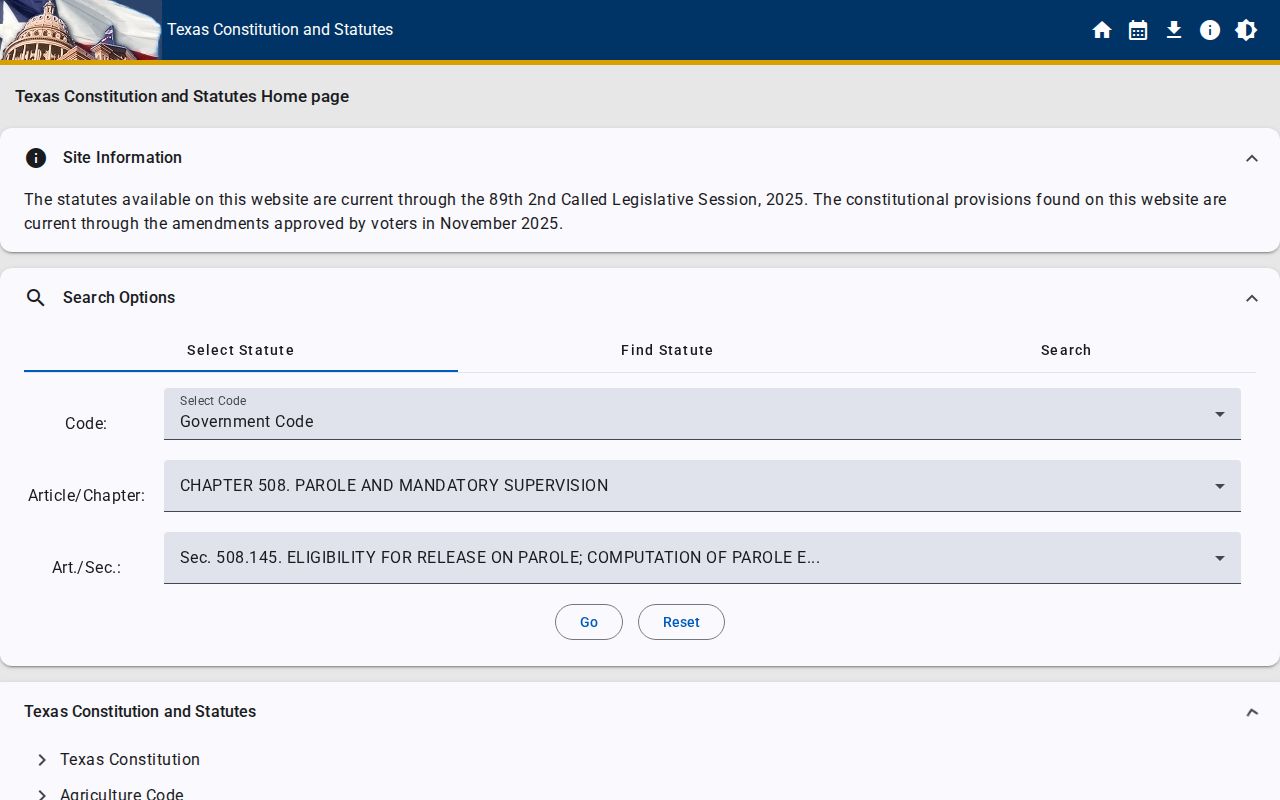
Use the applicable judgment and TDCJ calculation. A broad percentage shortcut can produce a false date and should not replace the official record.
For Polk County cases, the safest statement preserves both scope and time: identify the custody agency, report the value exactly as published on the date checked, and state that later action may alter it. Once release occurs, replace the projection with the official actual-release or discharge evidence. That approach keeps a forecast from being repeated as a completed event.